
PhD Degree: Recognition of Prior Learning Pathways
Your PhD Degree journey documents years of research excellence into recognized credentials. In fact, doctoral graduates bring specialized knowledge, publications, awards, and professional capabilities. However, institutions abroad often only look at your basic transcript. Unfortunately, that creates massive problems for qualified professionals. Organizations completely overlook your actual competencies. Consequently, many talented individuals struggle to get proper recognition. Rather than dealing with that frustration alone, you need a complete professional file. That is exactly what ToHave builds for every PhD Degree applicant.
Building a comprehensive doctoral equivalency file requires real expertise. Essentially, the team evaluates your entire academic background, not just your enrollment records. You can explore the accreditation standards to understand global frameworks. Nevertheless, assembling that complete profile demands expert guidance. That’s precisely where ToHave steps in to bridge that critical gap.
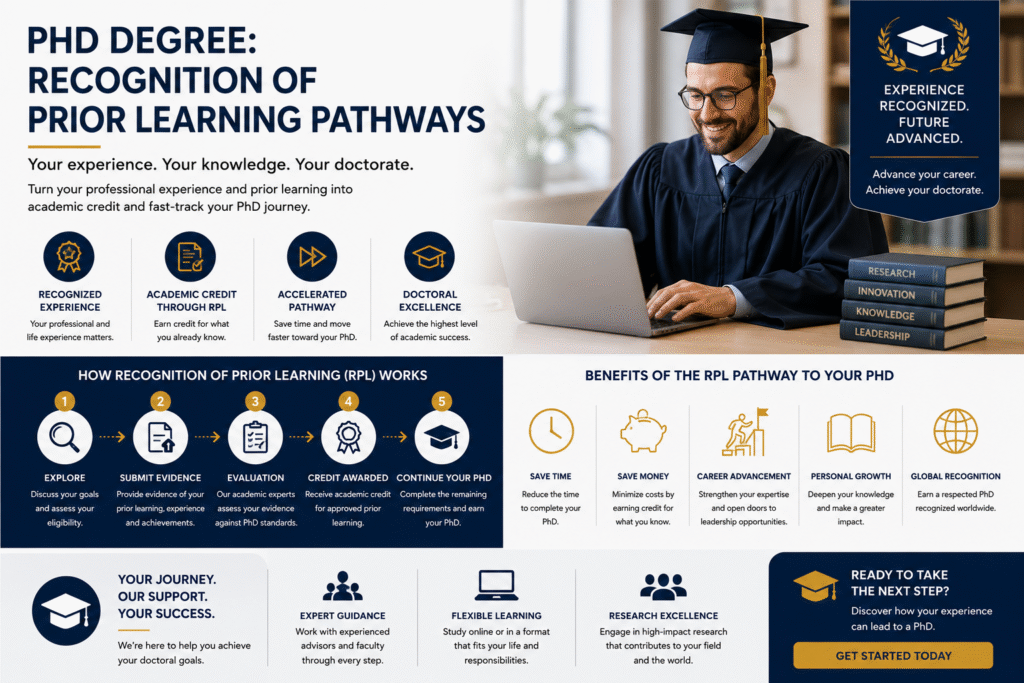
Understanding PhD Degree Recognition
Let’s get real for a moment. Your value as a doctoral professional extends far beyond your academic records. Actually, institutions need to see your complete competency profile. Unfortunately, many evaluators only focus on basic transcripts. Moreover, they miss your real-world contributions entirely. Additionally, institutions often ignore your publications and awards. Consequently, they undervalue you despite your actual capabilities. After all, your years of PhD Degree work deserve proper recognition.
This is where comprehensive equivalency becomes absolutely essential. Specifically, you need someone to document your entire academic background properly. Without that documentation, your doctoral achievements remain hidden. Furthermore, incomplete files block your progress globally.
Beyond Just Academic Credentials
Your PhD Degree file should tell your complete story. For instance, your published articles demonstrate specialized expertise. Your academic awards prove peer recognition. Meanwhile, your research shows theoretical capabilities. Institutions need to understand these doctoral differences clearly. Moreover, they need to see how your background compares to their standards. In contrast, most systems only look at basic transcripts.
ToHave captures that complete picture. Specifically, the team documents your publications, awards, and academic achievements. Additionally, they translate these materials when necessary. This comprehensive approach makes a tremendous difference. As a result, institutions finally see your doctoral background properly.
How ToHave Builds Your PhD Degree Profile
The team handles every aspect of your academic file construction. First, they interview you about your educational journey. Then they identify all relevant documentation. Additionally, they research the specific requirements for your field. Finally, they compile everything into a compelling case. Consequently, your file tells a complete professional story about your PhD Degree.
This thorough approach eliminates nothing important. Moreover, the team ensures every doctoral competency gets proper weight. Additionally, they translate documents when necessary. ToHave manages every single detail. Therefore, the team overlooks nothing during the critical assembly phase.
The Comprehensive File Construction Process
So you’re ready to build your professional file. Now you need expert assistance. You could attempt gathering everything yourself. That means hours organizing documents and translating materials. Alternatively, you could let specialists handle it. ToHave serves as the official representative. Consequently, that transforms the doctoral documentation process completely.
First, they hold official status. Moreover, they know precisely what institutions expect. They don’t guess or make blind assumptions. Instead, they possess direct access to current equivalency criteria. Therefore, this insider knowledge ensures your academic file meets all requirements from day one. As a result, no more dreaded back-and-forth emails delaying your progress.
Gathering PhD Degree Evidence
The team collects documentation from every aspect of your academic career. Initially, they gather your doctoral transcripts and diplomas. Next, they collect your published articles and research contributions. Furthermore, they document your academic projects and achievements. Ultimately, they include any awards or academic recognition. As a result, your PhD Degree file represents your complete academic identity.
This systematic approach captures everything valuable. Moreover, you don’t need to worry about missing documentation. Additionally, professionals handle translation perfectly. ToHave manages every single piece. Therefore, ToHave presents your complete doctoral profile properly.
Academic Achievements Matter
Your formal education forms the foundation of your file. However, it’s just the beginning. Your thesis work demonstrates research capabilities. Additionally, your specialized coursework shows focused expertise. Therefore, ToHave documents every academic achievement. Consequently, institutions see your complete doctoral background. You can learn more about doctoral degree frameworks to understand these systems globally.
Professional Experience Counts
Your work history proves real-world capabilities. Your projects demonstrate practical skills. Moreover, your leadership roles show management abilities. Additionally, your client work proves applied expertise. ToHave captures all these elements. Therefore, institutions see beyond just your transcript.
Identifying Knowledge Gaps
Sometimes your academic file needs additional elements. The team identifies any missing qualifications. Moreover, they recommend specific courses when necessary. Additionally, they coordinate additional training programs. Finally, they update your file with new credentials. Consequently, your PhD Degree profile becomes truly complete.
This proactive approach eliminates surprises later. Moreover, you get clear guidance on next steps. Additionally, the team handles all coordination. ToHave manages every recommendation. Therefore, your doctoral file strengthens continuously.
Recommending Additional Training
Some fields require specific certifications. Your PhD Degree file might need additional coursework. Moreover, certain institutions expect particular qualifications. Additionally, professional licenses often strengthen applications. ToHave identifies these needs early. Therefore, you complete requirements before submission.
Supporting All Disciplines
The team handles every professional field. Engineers get technical expertise documented. Additionally, artists showcase creative portfolios. Moreover, business professionals highlight leadership achievements. Furthermore, healthcare workers document clinical experience. ToHave supports them all equally. Therefore, your field gets proper representation.
Preparing Your PhD Degree Documentation
Alright, you’ve decided to work with ToHave for your PhD Degree. That’s a smart decision. Now you need to gather your materials. Professional equivalency involves much more than certificates. Essentially, you need to demonstrate your complete expertise. Furthermore, verifiable records prove your capabilities.
What ToHave Collects for Your File
First, the team gathers your doctoral transcripts and diplomas. Additionally, published articles belong in your file too. Moreover, academic awards carry significant weight. Furthermore, research documentation matters greatly. Additionally, industry certifications strengthen your case. The team must understand exactly what you’ve accomplished. Therefore, the more materials you provide, the better. ToHave constructs your complete PhD Degree file.
Frequently Asked Questions
Does work experience count for my PhD Degree?
Absolutely, work experience forms the foundation of academic documentation. Furthermore, the team documents your projects and achievements. Additionally, they translate employment records when necessary. Consequently, your professional background strengthens your PhD Degree file.
What if I need additional doctoral courses?
The team identifies any knowledge gaps. Moreover, they recommend specific courses when necessary. Additionally, they coordinate enrollment and completion. ToHave guides you through every additional requirement for your academic file.
Can ToHave handle creative PhD Degree fields like art?
Yes, absolutely. The team supports engineers, artists, business professionals, and everyone between. Furthermore, they know how to document creative portfolios. Consequently, your field gets proper representation.
Do publications help my academic file?
Publications demonstrate deep expertise powerfully. Additionally, research articles prove peer recognition. Moreover, conference presentations show thought leadership. ToHave includes all published work in your doctoral file.
Why use ToHave for PhD Degree equivalency?
Applying directly means guessing requirements. However, ToHave is the official representative. Moreover, they know the exact criteria for your background. Consequently, they ensure your file meets every standard perfectly.