
Food Biotechnology Degree: Genetic Engineering and Fermentation Science Mastery
Global food systems face unprecedented pressure from population growth and climate change. Actually, scientists now engineer crops at the molecular level and cultivate meat from cells. Today, a Food Biotechnology Degree represents mastery of genetic modification, fermentation science, and molecular gastronomy. You can explore the Institute of Food Technologists to understand global industry standards. However, international food corporations evaluate biotechnologists through extremely specialized scientific lenses. Moreover, laboratory research often gets confused with general food science. Additionally, your genetic engineering experience remains underappreciated abroad. Furthermore, your fermentation optimization skills need proper contextualization. Therefore, comprehensive documentation becomes absolutely essential. That is precisely where ToHave transforms your academic achievements.
Consider the reality facing thousands of graduates annually. Actually, you have invested years mastering complex molecular pathways. Moreover, you have developed sophisticated strain improvement frameworks. Unfortunately, these scientific achievements frequently encounter unnecessary barriers. Furthermore, your career opportunities remain artificially limited. Consequently, strategic positioning becomes critical for your Food Biotechnology Degree. ToHave addresses this challenge systematically through specialized services.
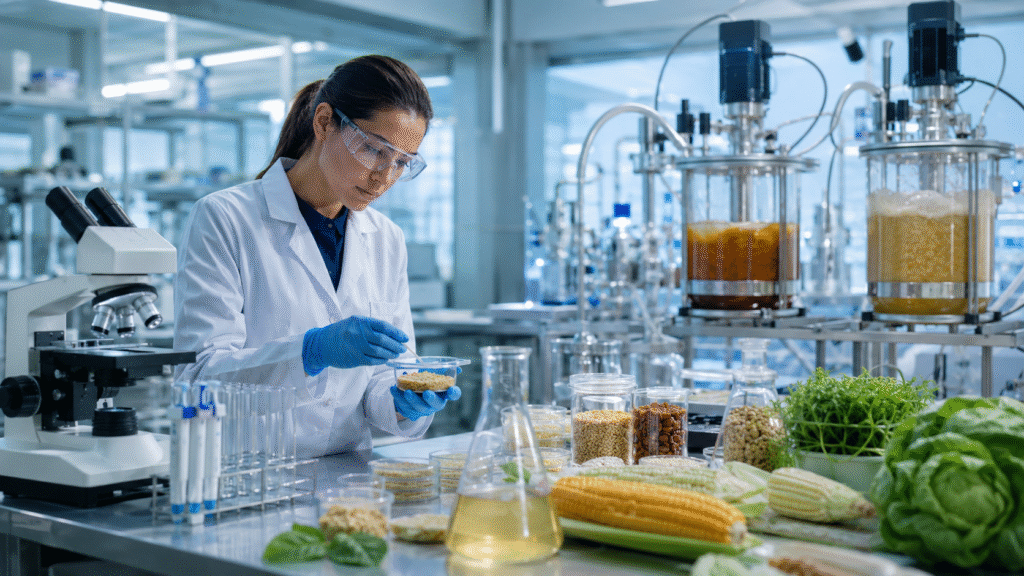
The Scientific Core of Modern Food Production
Modern agriculture demands experts who understand biology computationally. Actually, food biotechnology cultivates exactly these molecular capabilities systematically. Moreover, you learn to deconstruct metabolic pathways into measurable yields. Additionally, you develop frameworks for mapping gene expression to nutritional outcomes. Furthermore, you master the art of balancing scientific innovation with consumer acceptance. Consequently, your academic background proves your ability to engineer food systems scientifically. ToHave highlights this scientific foundation prominently.
Actually, this field sits exactly at the intersection of microbiology and engineering. Moreover, you must understand cell biology just as well as bioreactor design. Additionally, you learn to bridge the gap between laboratory discoveries and industrial scale-up. Furthermore, this unique perspective makes you invaluable in food technology companies.
How Food Biotechnology Degree Masters Genetic Modification
Creating novel food traits requires sophisticated genomic knowledge. Actually, your Food Biotechnology Degree trains you to analyze DNA sequences systematically. Moreover, you learn to evaluate CRISPR-Cas9 editing, RNA interference, and transgenic approaches. Additionally, you master marker-assisted selection, gene stacking, and trait validation. Furthermore, you develop skills in designing field trials and regulatory dossiers. Consequently, your analytical capabilities become highly valuable across seed companies. ToHave documents these advanced technical skills thoroughly.
GMO Development and Trait Selection in Your Food Biotechnology Degree
Effective crop improvement requires deep molecular understanding. Actually, a Food Biotechnology Degree emphasizes drought tolerance, pest resistance, and nutritional enhancement. Moreover, you learn to analyze gene promoters, coding sequences, and terminator regions. Additionally, you study transformation methods, tissue culture, and regeneration protocols. Furthermore, you develop skills in molecular characterization and event-specific detection. Consequently, your Food Biotechnology Degree creates scientists who engineer climate-resilient crops perfectly. ToHave captures this genetic capability perfectly.
Enzyme Engineering and Protein Modification
The shift towards clean label products relies entirely on enzyme technology. Actually, biotechnologists must design enzymes that function under specific processing conditions. Moreover, they use directed evolution to improve enzyme stability and activity. Additionally, they leverage protein engineering to create novel textures and flavors. Furthermore, your academic background ensures you can harness these powerful molecular tools effectively. Consequently, your food innovations engage consumers with cleaner ingredients.
Industrial Applications and Scale-Up Challenges
Translating laboratory discoveries into commercial products requires specialized engineering knowledge. Actually, food companies depend on scientists who understand bioprocess optimization. Moreover, they need experts who can navigate complex fermentation parameters. Additionally, they face constant pressure to reduce costs while maintaining quality. Furthermore, your academic background prepares you for this dynamic industrial environment effectively.
The focus on sustainable manufacturing is transforming food production completely. Actually, facilities must minimize water usage and energy consumption. Moreover, they use metabolic engineering to optimize microbial yields. Additionally, they design circular economy processes that valorize byproducts. Furthermore, your academic background prepares you for this sustainable production paradigm.
Where Your Food Biotechnology Degree Creates Global Impact
The applications of biotechnology expertise span virtually every food sector. Actually, your Food Biotechnology Degree opens doors to incredibly diverse career paths. Moreover, you can work in seed companies, ingredient manufacturers, regulatory agencies, or research institutes. Additionally, you might pursue roles in alternative proteins, flavor chemistry, or quality assurance. Furthermore, the demand for skilled biotechnologists continues growing exponentially globally. Consequently, ToHave aligns your Food Biotechnology Degree equivalency file with these dynamic industry needs.
Leading ingredient companies rely heavily on trained biotechnologists to drive innovation. Actually, these professionals develop novel enzymes and probiotic strains. Moreover, they optimize fermentation processes and scale up production. Furthermore, your academic background prepares you perfectly for these vital R&D roles.
Fermentation Technology and Alternative Proteins for Food Biotechnology Degree
Creating sustainable food sources requires specialized fermentation expertise. Actually, many graduates use their Food Biotechnology Degree to become fermentation scientists. Moreover, you learn precision fermentation, mycelium cultivation, and cell culture media design. Additionally, you conduct bioreactor optimization and downstream processing. Furthermore, you ensure products meet strict safety and scalability requirements globally. Consequently, your technical skills directly enable the alternative protein revolution. ToHave ensures your fermentation credentials meet international standards.
Food Safety and Regulatory Affairs
Navigating complex regulatory pathways requires specialized legal and scientific knowledge. Actually, biotechnologists must compile comprehensive safety dossiers for novel foods. Moreover, they use toxicological studies and allergenicity assessments to prove safety. Additionally, they leverage international harmonization frameworks to streamline approvals. Furthermore, your academic background ensures you can navigate these rigorous regulatory frameworks effectively. Consequently, your innovations reach markets safely and legally.
Agricultural Biotechnology and Crop Improvement with Food Biotechnology Degree
Enhancing crop productivity requires deep plant science knowledge. Actually, your Food Biotechnology Degree teaches you plant physiology and stress biology. Moreover, you learn to design transformation vectors and select optimal explants. Additionally, your background enables you to develop climate-smart crop varieties. Furthermore, you can conduct multi-location field trials effectively. Therefore, your academic background creates exceptional agricultural scientists. ToHave highlights these crop improvement capabilities effectively.
Nutraceutical Development and Functional Foods for Food Biotechnology Degree
Creating health-promoting foods requires specialized nutritional knowledge. Actually, your Food Biotechnology Degree teaches you bioactive compounds and health claims. Moreover, you learn to encapsulate sensitive nutrients and enhance bioavailability. Additionally, your background enables you to design evidence-based functional foods. Furthermore, you can validate health benefits through clinical trials. Therefore, your academic background creates exceptional nutraceutical scientists. ToHave highlights these functional food capabilities effectively.
Is this degree different from food science?
Actually, they focus on entirely different scientific domains. Moreover, food science emphasizes processing, chemistry, and safety. Additionally, your biotechnology background provides deeper training in molecular biology and genetic engineering. Furthermore, you understand the cellular mechanisms of food production. Consequently, your specialized foundation enables you to engineer new food solutions rather than just process existing ones.
How does ToHave validate biotechnology credentials internationally?
ToHave understands the global food science standards. Actually, the team verifies your Food Biotechnology Degree against international frameworks. Moreover, they document your genetic engineering projects and fermentation research thoroughly. Additionally, they highlight your specific laboratory skills and molecular expertise. Furthermore, they ensure your file meets top food technology company requirements.
Can I transition into cultured meat with this background?
Absolutely, the alternative protein sector values biotechnology expertise highly. Actually, your Food Biotechnology Degree provides strong foundation for cell-based meat roles. Moreover, you understand cell culture, tissue engineering, and bioreactor design. Additionally, your scientific training helps you optimize cell proliferation and differentiation. Furthermore, you can develop scalable production processes for cultivated meat.
What makes this degree valuable for regulatory affairs?
Regulatory affairs fundamentally requires understanding molecular safety and toxicology. Actually, your Food Biotechnology Degree teaches you GMO risk assessment and allergenicity testing. Moreover, you learn to compile comprehensive safety dossiers for novel foods. Additionally, your background enables you to navigate complex international approval processes. Furthermore, you can communicate scientific data effectively to regulatory agencies.
Do I need a PhD for R&D roles?
Requirements vary significantly by employer and specific role. Actually, advanced research positions typically require PhD completion. Moreover, academic and senior industry roles often prefer doctoral credentials. Additionally, many biotechnology companies accept master’s degrees with strong laboratory experience. Furthermore, your Food Biotechnology Degree provides the deep theoretical foundation for advanced graduate study.
Your academic journey represents deep commitment to sustainable food systems and scientific innovation. Actually, this education equips you with tools to feed the world safely. Moreover, you possess scientific expertise to solve complex biological problems. Additionally, your molecular skills and engineering knowledge create rare professional profile. Furthermore, global demand for skilled biotechnologists continues surging. Therefore, maximizing your Food Biotechnology Degree investment requires strategic international positioning.
ToHave ensures you receive full recognition for your hard work. Actually, the team positions your scientific credentials optimally. Moreover, they highlight your unique blend of molecular and industrial skills. Additionally, they connect you with organizations that value biotechnology expertise. Furthermore, they prepare you to thrive in diverse global food environments. Consequently, your academic achievements open doors worldwide. You can learn more about food biotechnology principles to understand its broad impact.
Actually, your Food Biotechnology Degree provides a massive advantage in today’s sustainability-focused world. Moreover, companies desperately need scientists who can engineer better food solutions. Additionally, your Food Biotechnology Degree proves you can drive the future of food production.