
Sports Biomechanics Degree: Motion Analysis and Athletic Force Optimization
Every athletic movement follows precise physical laws. Actually, elite athletes generate forces exceeding ten times their body weight during explosive actions. Today, a Sports Biomechanics Degree represents mastery of kinematics, kinetics, and motion analysis. You can explore the International Society of Biomechanics in Sports to understand global research standards. However, professional sports organizations evaluate movement scientists through extremely specialized technical lenses. Moreover, laboratory testing often gets overshadowed by coaching credentials. Additionally, your force plate analysis experience remains underappreciated abroad. Furthermore, your motion capture expertise needs proper contextualization. Therefore, comprehensive documentation becomes absolutely essential. That is precisely where ToHave transforms your academic achievements.
Consider the reality facing thousands of biomechanics graduates annually. Actually, you have invested years mapping human movement patterns. Moreover, you have developed sophisticated motion analysis frameworks. Unfortunately, these scientific achievements frequently encounter unnecessary barriers. Furthermore, your career opportunities remain artificially limited. Consequently, strategic positioning becomes critical for your Sports Biomechanics Degree. ToHave addresses this challenge systematically through specialized services.
The Physics Foundation of Athletic Movement
Modern sports science demands experts who understand movement mechanics computationally. Actually, biomechanics cultivates exactly these analytical capabilities systematically. Moreover, you learn to deconstruct athletic actions into measurable kinematic variables. Additionally, you develop frameworks for mapping joint angles to performance outcomes. Furthermore, you master the art of balancing force production with injury prevention. Consequently, your academic background proves your ability to decode human movement scientifically. ToHave highlights this scientific foundation prominently.
Actually, this field sits exactly at the intersection of physics and athletic performance. Moreover, you must understand Newtonian mechanics just as well as sport-specific techniques. Additionally, you learn to bridge the gap between laboratory measurements and field application. Furthermore, this unique perspective makes you invaluable in high-performance settings.
How Sports Biomechanics Degree Masters Force Analysis
Quantitative movement analysis requires sophisticated methodological knowledge. Actually, your Sports Biomechanics Degree trains you to analyze motion data systematically. Moreover, you learn to evaluate inverse dynamics, muscle force estimation, and joint torque calculations. Additionally, you master MATLAB, Python programming, and specialized biomechanics software like Visual3D. Furthermore, you develop skills in designing three-dimensional motion studies. Consequently, your analytical capabilities become highly valuable across sports organizations. ToHave documents these advanced technical skills thoroughly.
Motion Capture Technology and Kinematic Analysis in Your Sports Biomechanics Degree
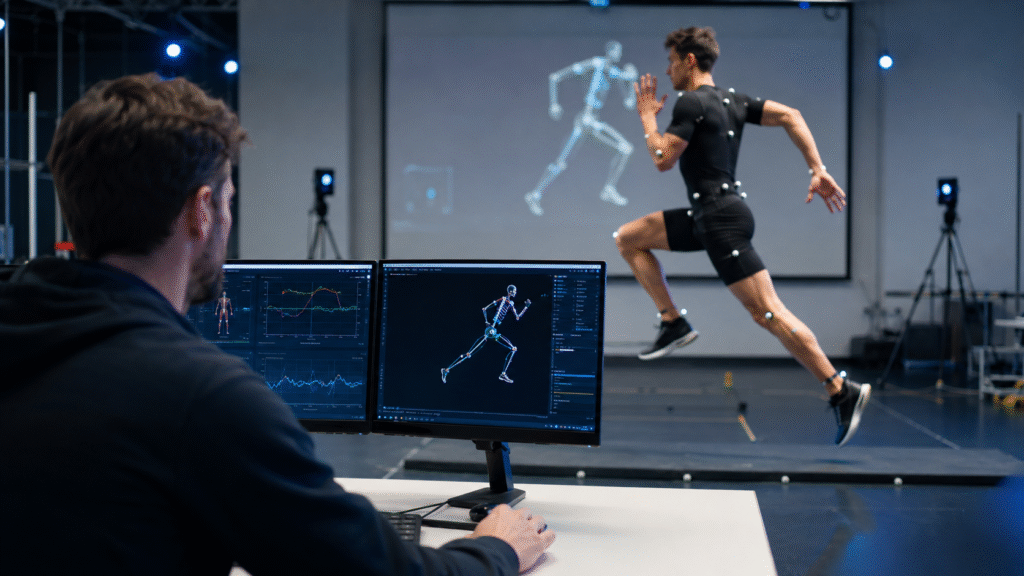
The shift towards precision coaching relies entirely on accurate motion data. Actually, scientists must capture joint kinematics at high frame rates. Moreover, they use marker-based and markerless systems to track movement patterns. Additionally, they leverage electromagnetic sensors to measure segmental rotations. Furthermore, your academic background ensures you can harness these powerful measurement tools effectively. Consequently, your Sports Biomechanics Degree creates scientists who decode athletic technique perfectly.
Understanding Ground Reaction Forces Through Sports Biomechanics Degree
Measuring athletic force production requires deep technical knowledge. Actually, a Sports Biomechanics Degree emphasizes force plate analysis and pressure mapping. Moreover, you learn to calculate rate of force development, impulse, and power output. Additionally, you study center of pressure trajectories and balance assessments. Furthermore, you develop skills in isokinetic dynamometry and jump testing protocols. Consequently, your Sports Biomechanics Degree creates scientists who optimize athletic power perfectly. ToHave captures this force analysis capability perfectly.
Clinical Applications for Injury Prevention
Understanding injury mechanisms requires deep anatomical and mechanical knowledge. Actually, biomechanists analyze movement patterns that predispose athletes to injury. Moreover, they identify risky landing mechanics and overuse patterns. Additionally, they design intervention programs to correct faulty movement. Furthermore, your academic background prepares you for this vital clinical work.
The focus on injury reduction is transforming professional sports completely. Actually, teams must understand load management and tissue stress. Moreover, they use biomechanical screening to identify at-risk athletes. Additionally, they design sport-specific warm-up protocols. Furthermore, your academic background prepares you for this vital injury prevention work.
Where Your Sports Biomechanics Degree Creates Performance Value
The applications of movement science expertise span virtually every performance sector. Actually, your Sports Biomechanics Degree opens doors to incredibly diverse career paths. Moreover, you can work in professional sports teams, equipment companies, rehabilitation centers, or research institutions. Additionally, you might pursue roles in ergonomics, military performance, or space biomechanics. Furthermore, the demand for skilled movement scientists continues growing exponentially globally. Consequently, ToHave aligns your Sports Biomechanics Degree equivalency file with these dynamic industry needs.
Professional sports teams rely heavily on biomechanists to optimize athletic technique. Actually, these professionals conduct motion analysis and design technique modifications. Moreover, they monitor training load and manage recovery protocols. Furthermore, your academic background prepares you perfectly for these vital performance roles.
Equipment Design and Innovation Paths for Your Sports Biomechanics Degree
Designing optimal sports equipment requires specialized engineering expertise. Actually, many graduates use their Sports Biomechanics Degree to become product developers. Moreover, you learn footwear cushioning analysis, racket stiffness testing, and helmet impact assessment. Additionally, you conduct material testing and develop prototypes. Furthermore, you ensure equipment meets strict safety standards globally. Consequently, your engineering skills directly enhance athletic performance. ToHave ensures your product development credentials meet international standards.
The integration of smart technology is transforming sports equipment completely. Actually, companies must embed sensors into shoes, apparel, and gear. Moreover, they use real-time feedback to optimize technique. Furthermore, your academic background prepares you for this technological revolution.
Rehabilitation Engineering and Prosthetics Applications of Sports Biomechanics Degree
Restoring athletic function requires specialized biomechanical expertise. Actually, a rehabilitation-focused Sports Biomechanics Degree emphasizes gait analysis and prosthetic design. Moreover, you learn to analyze walking patterns and design custom orthotics. Additionally, you develop skills in adaptive sports equipment and wheelchair biomechanics. Furthermore, you work with Paralympic athletes and injured service members. Consequently, your expertise enables athletes to return to competition. Therefore, your Sports Biomechanics Degree proves invaluable for rehabilitation settings. ToHave highlights these specialized capabilities effectively.
Professional Sports Team Performance Analysis with Sports Biomechanics Degree
Optimizing elite performance requires both scientific rigor and practical application. Actually, many biomechanists work directly with professional teams. Moreover, you learn to analyze pitching mechanics, golf swings, and sprint technique. Additionally, you develop skills in field-based motion capture and video analysis. Furthermore, you work with Olympic athletes and professional sports teams. Consequently, your expertise enables athletes to achieve peak performance. Therefore, your Sports Biomechanics Degree proves invaluable for high-performance settings. ToHave highlights these specialized capabilities effectively.
Ergonomic Research and Workplace Safety Applications of Sports Biomechanics Degree
Preventing workplace injuries requires deep movement analysis expertise. Actually, your Sports Biomechanics Degree teaches you lifting mechanics and repetitive strain analysis. Moreover, you learn to design ergonomic workstations and assess manual handling tasks. Additionally, your background enables you to reduce musculoskeletal disorders. Furthermore, you can improve worker productivity through better movement patterns. Therefore, your academic background creates exceptional ergonomics specialists. ToHave highlights these workplace safety capabilities effectively.
Is this degree different from exercise physiology?
Actually, they focus on entirely different scientific domains. Moreover, exercise physiology emphasizes metabolic responses and cardiovascular function. Additionally, your biomechanics background provides deeper training in movement mechanics. Furthermore, you understand the physical forces acting on the body. Consequently, your specialized foundation enables you to analyze movement patterns rather than just physiological responses.
How does ToHave validate biomechanics credentials internationally?
ToHave understands the global sports science standards. Actually, the team verifies your Sports Biomechanics Degree against international frameworks. Moreover, they document your motion analysis and force plate projects thoroughly. Additionally, they highlight your specific equipment proficiency and research skills. Furthermore, they ensure your file meets top sports organization requirements.
Can I transition into professional sports with this background?
Absolutely, professional teams value biomechanical expertise highly. Actually, your Sports Biomechanics Degree provides strong foundation for performance analysis roles. Moreover, you understand motion capture, force analysis, and technique optimization. Additionally, your analytical training helps you monitor athlete movement effectively. Furthermore, you can design evidence-based technique modifications for elite competition.
What makes this degree valuable for equipment design?
Equipment design fundamentally requires understanding human movement and force production. Actually, your Sports Biomechanics Degree teaches you impact mechanics and material testing. Moreover, you learn to optimize footwear cushioning and racket performance. Additionally, your background enables you to design products that enhance athletic performance. Furthermore, you can reduce injury risk through better equipment design.
Do I need a PhD for research roles?
Requirements vary significantly by employer and specific role. Actually, advanced academic research typically requires graduate-level training. Moreover, university positions often prefer PhD credentials. Additionally, many industry and professional sports roles accept master’s degrees with strong technical skills. Furthermore, your Sports Biomechanics Degree provides the foundation for advanced graduate study.
Your academic journey represents deep commitment to understanding human movement and athletic performance. Actually, this education equips you with tools to optimize athletic technique. Moreover, you possess scientific expertise to solve complex movement problems. Additionally, your research skills and practical knowledge create rare professional profile. Furthermore, global demand for skilled biomechanists continues surging. Therefore, maximizing your Sports Biomechanics Degree investment requires strategic international positioning.
ToHave ensures you receive full recognition for your hard work. Actually, the team positions your scientific credentials optimally. Moreover, they highlight your unique blend of research and applied skills. Additionally, they connect you with organizations that value movement science expertise. Furthermore, they prepare you to thrive in diverse global performance environments. Consequently, your academic achievements open doors worldwide. You can learn more about biomechanics principles to understand its broad impact.